A refresher course
October is Down syndrome awareness month. Down syndrome is a genetic condition first described by John Langdon Down in 1866. Down syndrome is an extra copy of the 21st chromosome.
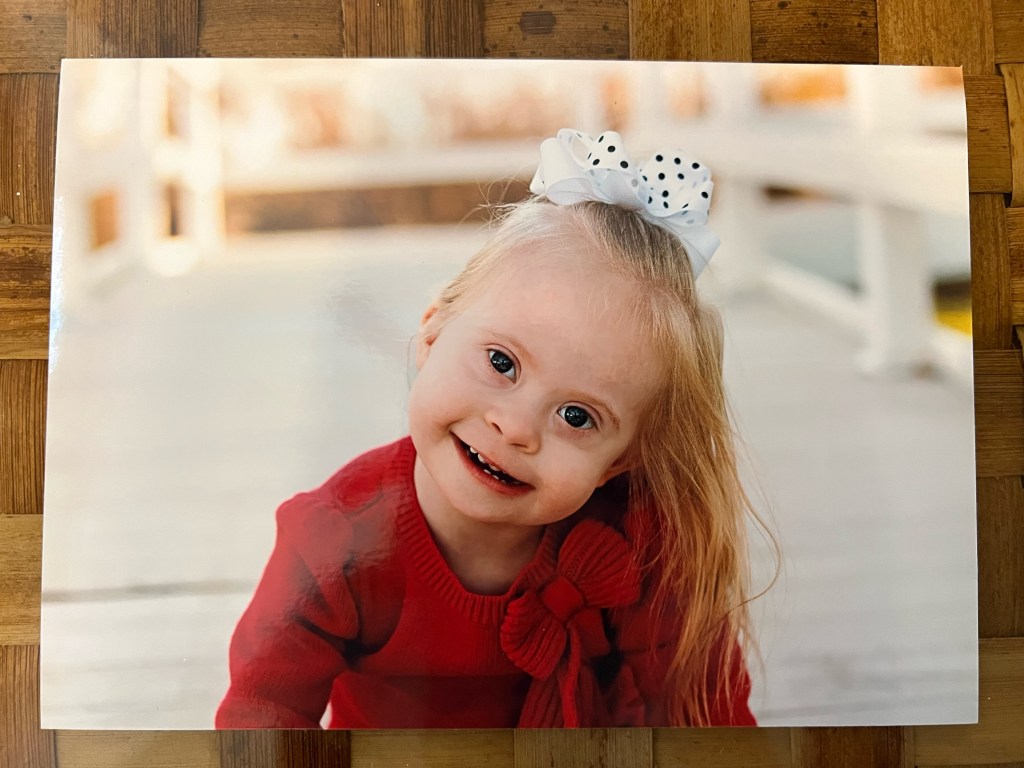
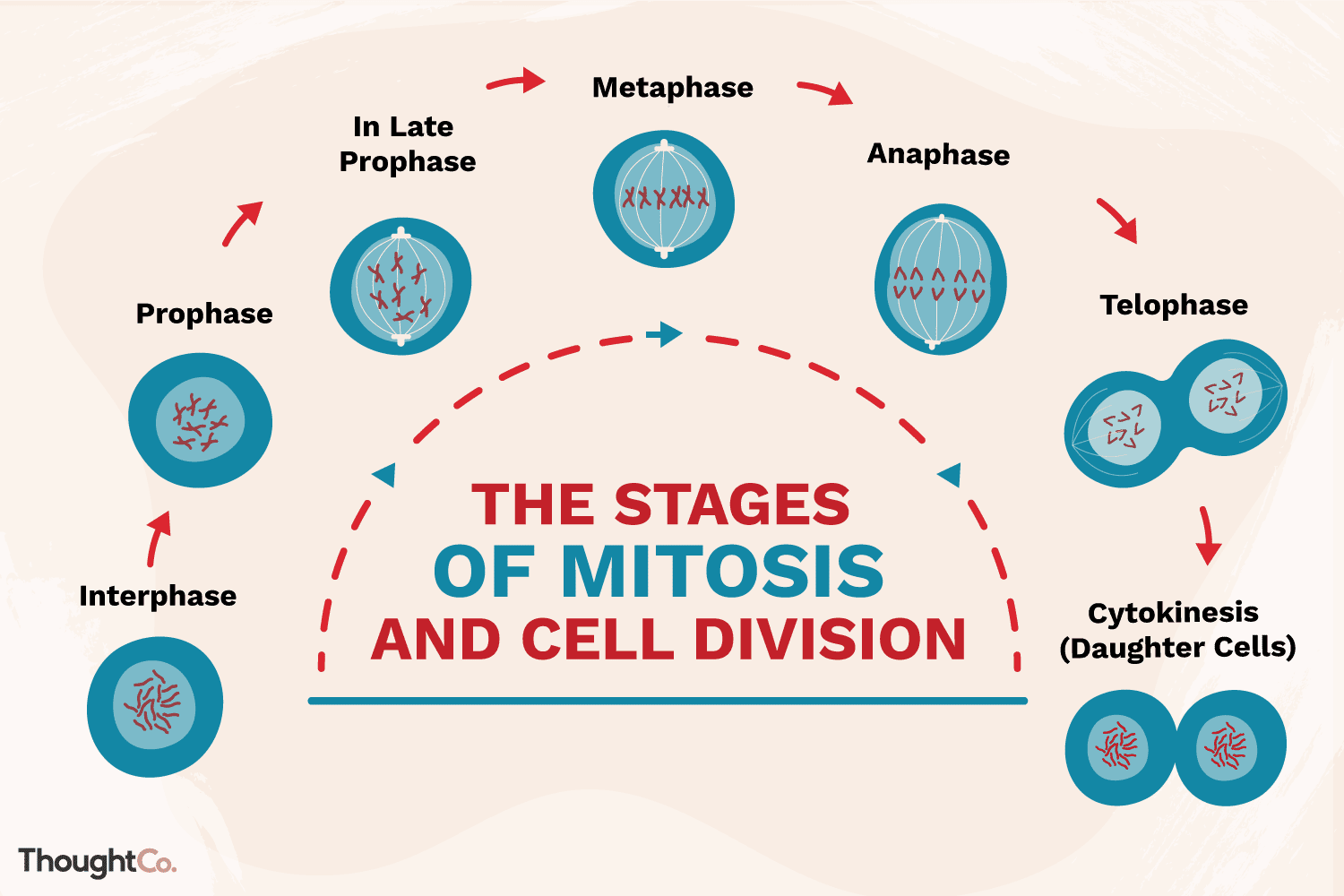
So how does it happen? The most common type of Down syndrome is Trisomy 21. This is what Grace has. During mitosis of the egg or sperm cell, the 21st chromosome doesn’t split correctly and one cell ends up with 2 copies instead of one. (Look at the image below. If the chromosome sticks in Anaphase, they don’t pull apart correctly. In Telephase, you end up with one cell that has too many chromosomes and one cell that doesn’t have enough chromosomes.) If that cell is fertilized, the embryo ends up with 3 copies of the 21st chromosome.
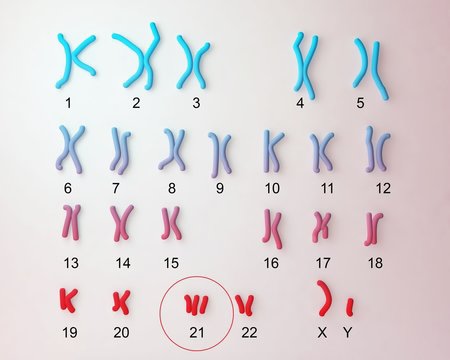
You can’t have just a little Down syndrome. You either have that extra chromosome or you don’t. However, it does seem to affect individuals differently. Some struggle more intellectually than others. Some have more or less physical issues, and so on. It’s all a great big mash up of genetics, environment, educational opportunities, and life’s little mysteries.
Health concerns
Respiratory infections are more common among people with Down syndrome, as are heart defects, leukemia, and thyroid disorders.
Grace had a VSD (a heart defect due to an abnormal connection between the lower chambers of the ventricles) at birth. It closed on its own when she was around 2 years of age. She gets her blood drawn every year to check for signs of leukemia and thyroid issues. Apart from a cold here and there, Grace does not have many of the health problems that individuals with Down syndrome can have.
Vision, hearing, and sleep problems are also common among individuals with Down syndrome.
Grace is farsighted with an astigmatism. Her glasses are pretty thick, but she does great with them. Grace also has obstructive sleep apnea. She does not get great sleep and usually wakes up during the night for 1-2 hours. Her oxygen levels are still ok at night, but we will continue to monitor them. If it drops too low, she’ll need a Cpap.
Up to 80% of children with Down syndrome experience hearing loss, sometimes severe. Even mild hearing loss will lead to difficulties in speech and language development, which are already a challenge.
Speech and communication
Grace has been in speech therapy since she was a toddler. Most of what she says comes in short 2-3 word phrases. For the most part, I understand her really well. Other people have a hard time understanding her as she still has articulation issues.
The voice of people with Down syndrome is a fascinating article that goes into detail about speech difficulties:
“The average person uses 72.52 microvolts of energy to initiate voice: that is to set in motion the vocal cord vibrations that are perceived as underlying so much of human communication.
The person with Down syndrome uses 131.57 microvolts to achieve the same effect (nearly twice as much).
If initiating voice is difficult, one is less likely to put in the ‘back channels’ which show that one is involved in the interaction. One may have something relevant to say but if it takes time to contribute comment, someone else may have seized the initiative. Your punchline may be lost. If this happens too often, you may become discouraged from ever trying to contribute.
People who cannot easily vocalise are at a disadvantage in all language learning. The telegraphic style of many young people with Down syndrome (Bray and Woolnough, 1988) may in part be due to their inability to produce voice long enough to sustain a normal length sentence.”
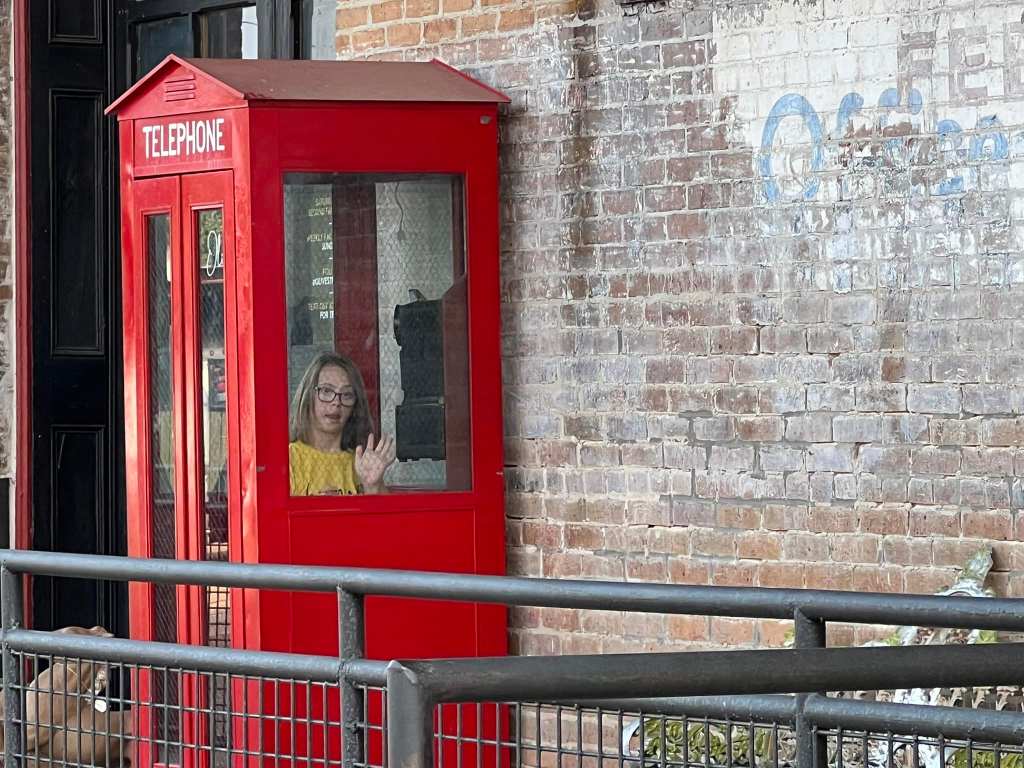
Friends, that means it is HARD WORK for individuals with Down syndrome to talk! Add on top of that the coordination it takes to get your tongue and mouth in all the correct places for sound production Individuals with Down syndrome want to communicate. Encourage them, ask questions, give them EXTRA TIME, and find others ways to communicate when needed.
Chosen or choosing
Sometimes people say things meaning to be helpful or encouraging, like “God knew what he was doing when he chose you to be Grace’s mom.”
The truth is, I don’t believe God chooses certain people to be parents of children with disabilities. I was not chosen; I choose to gain strength, patience, love, and understanding from lots of places. I pray for these things often when I’m faced with any difficult situation. I rely on family and friends for encouragement and advice. I look to parents who are currently walking our path and those ahead of us for inspiration.
Jeff and I chose to be the best parents we could be for our baby. We chose to aim high and support Grace in any way needed. Sometimes we need strength, sometimes patience, but don’t all parents?
Grace’s life is full of laughter, love, hard work, and play. And our life is full, with Grace.
 Gray Colored Glasses