
What you don’t know could save someone’s life
Did you know that a simple strep infection — and a host of other bacterial and viral infections — can trigger a devastating disorder, one that crosses the imaginary boundary between mental and physical illness?
Thankfully, that disorder – PANS/PANDAS – is gaining increasing recognition through efforts like Global PANS/PANDAS Awareness Day on October 9, with many national and international landmarks lighting up green. It’s also the subject of an upcoming guide in the award-winning Bias Busters series out of MSU School of Journalism and Front Edge Publishing. As a journalist and the mother of a child who lived with PANS through most of his childhood, I am privileged to serve as Community Editor of this guide.
What is PANS/PANDAS?
What is PANS/PANDAS? PANS and PANDAS are acronyms for Pediatric Acute-onset Neuropsychiatric Syndrome (PANS) and Pediatric Autoimmune Neuropsychiatric Disorders Associated with Streptococcal Infections (PANDAS).
PANS and PANDAS can look like behavioral regression but are actually the result of neural inflammation or inflammation in the brain. Symptoms include a sudden onset of Obsessive Compulsive Disorder or severely restricted eating and at least two other neuropsychiatric symptoms, including motor or vocal tics, extreme anxiety, behavioral or developmental regression, academic decline and more. PANS/PANDAS is a serious condition requiring expert intervention, but few doctors or medical professionals have the knowledge or training to recognize it in their patients or treat it effectively. As a result, children and youth who suffer from this disorder often go five or more years before receiving a proper diagnosis or getting critical treatment that could change the course of their life.
A guide for and from the community
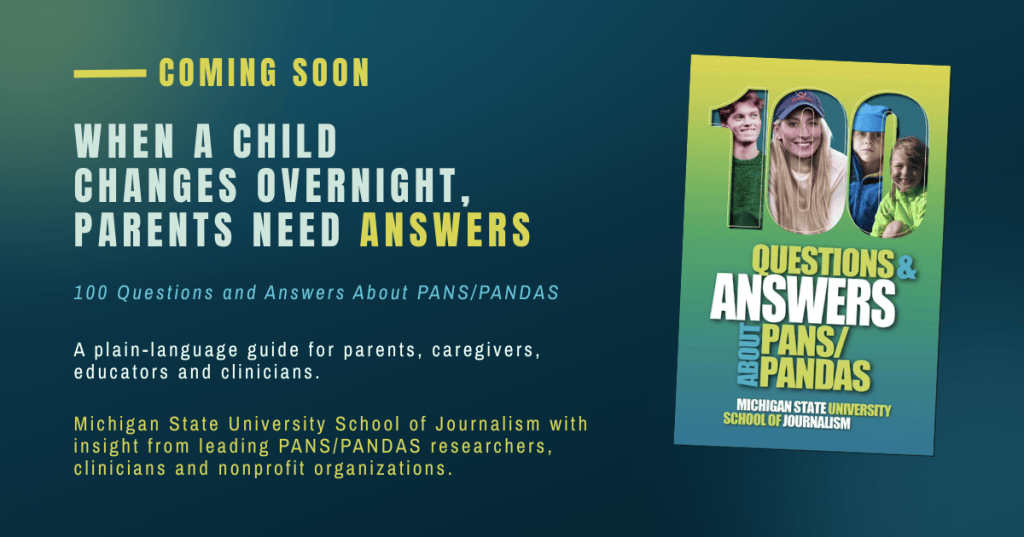
Our much-anticipated book, “100 Questions and Answers About PANS/PANDAS,” has been in production for almost two years, starting with MSU School of Journalism students and backed by a group of premier non-profit organizations, including ASPIRE, EXPAND, Look.Foundation, NWPPN, PANDAS Network, and The Alex Manfull Fund. The project has received additional support from Dr. Jennifer Frankovich of the Stanford Immune Behavioral Health Clinic and Dr. Susan Swedo, whose team at NIMH discovered the link between Group A Strep and the distinct cluster of symptoms that characterize PANS and PANDAS.
“100 Questions and Answers About PANS/PANDAS” is expected to be released in early 2027. This book will be a timely guide to help educate the public about PANS/PANDAS and provide help and knowledge to families navigating the illness. It will also serve as a launchpad for medical professionals who want to learn more and a tool to advance critical legislative change. Every once in a while a book hits an important topic at an especially ripe time. PANS/PANDAS is that topic, and NOW is that time.
Awareness continues with you. To be part of the movement and stay informed about the release of “100 Questions and Answers About PANS/PANDAS,” please visit the PANS/PANDAS Book page and subscribe to Gray Colored Glasses. I’ll be posting more action items in the days leading up to October 9 and throughout PANS/PANDAS Awareness month.

